Modern shotgunners rely on interchangeable chokes. It is far easier and more cost effective to screw a new choke into the end of a barrel than replace the entire barrel. A choke helps control the size of the shot pattern, typically based on its length and constriction. Shooters can use a choke suitable to the type of shooting they are doing: wide patterns for closer shots, tight patterns for longer shots. However, the folks at
Patternmaster Chokes approach things a little differently.
You’ll have to check out the Patternmaster Chokes website for a full description of how and why their choke work so well, but I’ll give you a quick overview. Instead of standard chokes that constrict the shot and the wad as they leave the barrel to create more dense patterns, the Patternmaster Chokes have small studs inside the choke that slow down the wad for a split second. This allows the shot to leave the barrel unaffected by the wad, essentially keeping all the shot together in its already-dense pattern. In addition, the shot does not “funnel down” like it does leaving constricted tubes. The Patternmaster Chokes help keep a denser pattern both in terms of spread and more importantly, length. With a shorter shot string, more pellets arrive on target at the same time, which is very important when shooting anything that is moving.
My brother first started using a Patternmaster Choke quite a few years ago. After I bought a 12 gauge 3-1/2”
Benelli Nova to use for sandhill cranes, waterfowling, and pheasants, I contacted Julie Leutenegger at Patternmaster. She graciously shipped me an Extended Range choke tube for the best patterning with 3-1/2” shells for the longer shots I expected on sandhill cranes and turkeys. After it performed so well, I also got the Long Range and Short Range chokes. I have used them all successfully on a variety of birds with 2-3/4”, 3”, and 3-1/2” shells.
They are available for almost every shotgun model available and come in silver or black and ported or unported. I chose black unported chokes to save my hearing and prevent glare. If you are looking at improving your patterning, take a close look at
Patternmaster Chokes. Their motto is “The Science of Shot” and they have definitely taken shotgun patterning to a different level!
P.S. When you go to their website, check out the photo of the turkey hunter using a slate call in the “How Patternmaster Works” video inset. That’s a photo I took of my brother Erik! Then watch the video - it provides a great explanation of their chokes...
 The black unported chokes don't cause as much glare and are safer for your hearing.
 Patternmaster Chokes also come in silver ported versions.
 Short Range Patternmaster Choke – (from top) Arizona Scaled Quail, Gambel’s Quail, and Mourning Dove
 Long Range Patternmaster Choke – A limit of Kansas Pheasants
 Long Range Patternmaster Choke – Kansas Bobwhite Quail
 Long Range Patternmaster Choke – Arizona Greenwing Teal
 Extended Range Patternmaster Choke – Arizona Sandhill Cranes
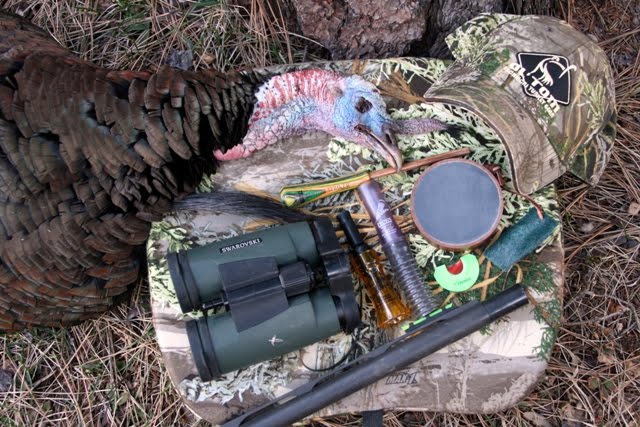
 Extended Range Patternmaster Choke – Arizona Merriam’s Turkey